
What is Robotic Rehabilitation
And Is It Right for Me?
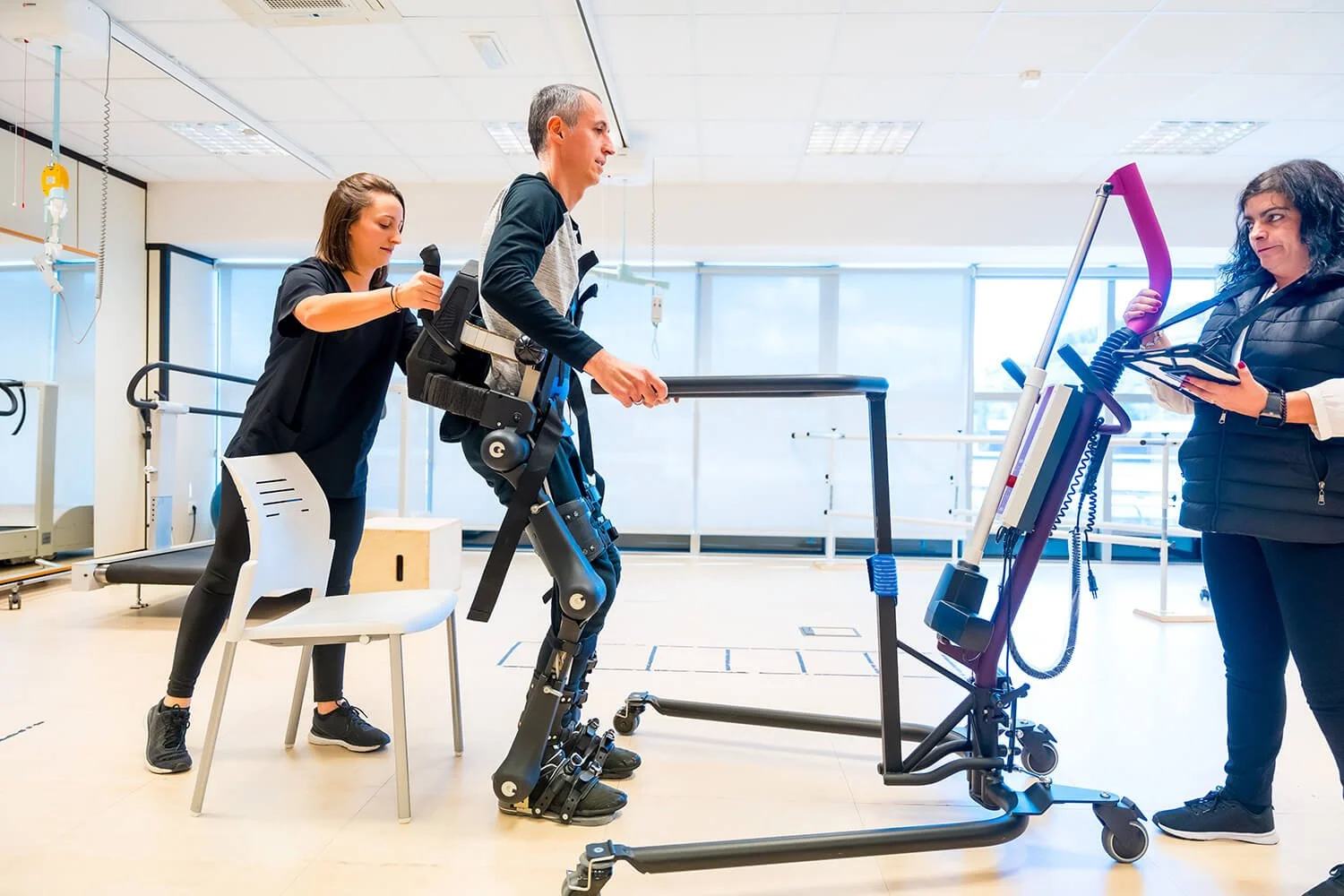
You may have heard the term at a hospital appointment, read about it online, or had a family member mention it. Robotic rehabilitation. It sounds both impressive and slightly intimidating, like something from a science fiction film rather than a Queensland physio clinic.
But here is the reality: robotic rehabilitation is not futuristic, not experimental, and not just for the most severe cases. It is an established, evidence-based approach to neurological and musculoskeletal rehabilitation that is changing what is possible for thousands of people, and it is available right here in North Lakes, at RehabX.
This article explains exactly what robotic rehabilitation is, why it works, what the research tells us, and, most practically, how to know whether it might be right for your situation.
So what exactly is robotic rehabilitation?
Robotic rehabilitation is the use of specially designed robotic and sensor-based devices to assist, guide, or enhance therapeutic exercise during the recovery process. These devices work alongside a trained physiotherapist or occupational therapist. They do not replace clinical expertise, they amplify it.
The defining feature of robotic rehabilitation is repetition. The brain and nervous system learn through practice, and not just a little practice, but thousands of high-quality repetitions of a movement, performed consistently and correctly. This is the foundation of neuroplasticity, the process through which the brain forms new neural connections in response to stimulation.
A physiotherapist can guide you through thirty or forty repetitions in a session. A robotic device can guide you through several hundred, with precision, consistency, and real-time feedback about every movement. This is the core advantage of technology-enhanced rehabilitation: it makes it possible to deliver the volume of practice that the nervous system needs to genuinely rewire.
The science behind why it works: Neuroplasticity and repetition
Neuroplasticity is the brain's ability to reorganise itself by forming new neural connections in response to experience and practice
After injury or neurological damage, other areas of the brain can learn to take over lost functions, but only with the right stimulus, delivered with sufficient frequency and quality
Research consistently shows that higher volumes of task-specific, repetitive practice produce better functional outcomes than lower-intensity approaches
Robotic devices make it possible to deliver the intensity of practice that drives neuroplastic change, even in people with very limited active movement
Biofeedback features in many devices make even tiny movements visible, giving the nervous system information it needs to learn, and giving patients evidence that recovery is happening
How is robotic rehabilitation different from regular physiotherapy?
Robotic rehabilitation is not an alternative to physiotherapy. It is physiotherapy, delivered with greater intensity, precision, and consistency than is achievable through manual therapy alone. Think of it as giving your physiotherapist a superpower.
Here is how the two approaches complement each other:
Conventional physiotherapy
Clinical assessment, reasoning, and treatment planning
Hands-on facilitation and manual techniques
Patient education, home programme design
Relationship, motivation, and goal-setting
Complex problem-solving for changing presentations
Coordination across the multidisciplinary team
Technology-enhanced rehabilitation
High-volume repetitive practice of specific movements
Precise, consistent guidance of correct movement patterns
Real-time biofeedback making progress visible instantly
Objective measurement of force, range, speed, and quality
Extended practice time beyond what a clinician can manually sustain
Gamified training that maintains engagement across long programs
At RehabX, robotic technology is always used as part of a broader, clinician-led treatment plan. A device is never deployed without a clinical rationale, and it is always operated under the supervision of a trained physiotherapist or occupational therapist who monitors your response and adjusts the program as your capacity changes.
What does the evidence actually show?
This is the most important question, and the answer is genuinely encouraging across multiple conditions and applications.
For stroke recovery
Robotic rehabilitation for stroke is the most extensively researched application of this technology, with hundreds of randomised controlled trials and multiple systematic reviews and meta-analyses now in the literature.
RESEARCH SPOTLIGHT
Systematic review and meta-analysis of robotic therapy for motor function after stroke (Front. Human Neurosci., 2025)
A 2025 systematic review and meta-analysis analysed 13 randomised controlled trials assessing robotic-assisted therapy for post-stroke motor recovery. The analysis found significant improvements across upper and lower limb function, gait speed, activities of daily living, and cognitive performance. Patients in the subacute stage, within six months of stroke, showed the greatest improvements, consistent with heightened neuroplastic responsiveness during early recovery. Longer therapy durations of six weeks or more produced more stable outcomes than short-term programs.
A separate 2025 systematic review and meta-analysis specifically examining robotic-assisted gait training (RAGT) after stroke found consistent improvements in walking ability and balance, with end-effector robotic systems showing particularly consistent improvements in gait speed across studies. Source
For spinal cord injury
Robotic rehabilitation for SCI, particularly robotic gait training for people with incomplete injuries, has a growing and promising evidence base. A comprehensive 2025 literature review found that upper limb robotic systems improve motor outcomes in SCI, especially in the subacute phase. Exoskeleton-based training has been shown in a 2023 randomised controlled trial to improve walking independence in people with incomplete SCI. Source
The message across the evidence base is consistent: robotic rehabilitation is not a gimmick. It is a clinically effective, neurobiologically grounded approach that produces real improvements in real people, and the evidence base is growing rapidly.
What robotic devices are available at RehabX?
RehabX is home to one of Australia's most comprehensive suites of rehabilitation technology. Here is an overview of each device, what it does, and who it is best suited to.
BTL R-Gait
What it does: An end-effector robotic gait trainer that guides the feet through a physiologically natural walking pattern. The R-Gait reproduces the biomechanics of normal gait, delivering high-repetition walking practice for people who cannot yet walk independently. It activates the neuroplastic pathways in the spinal cord and brain responsible for walking, helping to restore gait even in people with significant motor impairment.
Best suited to: People with neurological walking impairment following stroke, spinal cord injury, traumatic brain injury, Parkinson's disease, multiple sclerosis, or other conditions affecting lower limb function. Particularly effective in the early and intensive rehabilitation phases.
BTL R-Touch
What it does: A soft robotic glove that induces precise, physiologically correct finger and hand movements in people with reduced or absent hand function. By passively moving the fingers through correct patterns with high repetition, the R-Touch drives neuroplastic recovery of hand function at a neurological level, stimulating the motor cortex in ways that manual therapy alone cannot replicate.
Best suited to: People with hand and finger impairment following stroke, spinal cord injury (particularly cervical), traumatic brain injury, or peripheral nerve injury. Highly effective in both the early recovery phase and in chronic presentations where some recovery potential remains.
BTL R-Lead
What it does: A sensor-based upper limb and neurocognitive rehabilitation system for people in the mid-to-advanced recovery phase. R-Lead delivers interactive, task-specific training that simultaneously challenges physical and cognitive function, addressing the combined deficits that are common after neurological injury and that standard therapy rarely addresses together.
Best suited to: People with neurological conditions who retain some upper limb function and are working toward functional recovery and return to daily activities or work. Particularly valuable for people with combined physical and cognitive impairments.
THERA-Trainer Toro
What it does: A motor-assisted cycling system for comprehensive upper and lower extremity exercise. The Toro's intelligent motor assistance supports patients who cannot yet cycle independently, enabling passive, assisted, or active-resistive exercise depending on current capacity. Built-in safety features, including automatic spasticity detection, make it suitable across a wide range of presentations.
Best suited to: People across the full rehabilitation spectrum, from early recovery with minimal active movement through to active reconditioning. Particularly valuable for cardiovascular rehabilitation, spasticity management, and maintaining lower extremity function in neurological conditions.
BTL Super Inductive System (SIS)
What it does: The BTL Super Inductive System uses a high-intensity, focused electromagnetic field to stimulate neuromuscular tissue at depth, without skin contact, pain, or the need to remove clothing. The electromagnetic field causes controlled depolarisation of nerve and muscle tissue, producing therapeutic effects across five key areas: pain relief, spasticity reduction, joint mobilisation, myostimulation, and fracture healing. By modulating the frequency and intensity of the electromagnetic field, clinicians can target acute pain, chronic pain, and muscle dysfunction through different neurophysiological pathways, making the SIS one of the most clinically versatile devices in the RehabX technology suite.
Best suited to: People with acute or chronic musculoskeletal pain, joint stiffness, or restricted range of motion, including post-surgical and post-traumatic presentations. Particularly valuable for patients with neurological conditions experiencing spasticity, where the high-frequency electromagnetic field can reduce abnormal muscle tone and improve the quality of active movement. Also used in fracture rehabilitation to support bone remodelling, and in patients with muscle weakness or atrophy requiring neuromuscular stimulation between active therapy sessions.
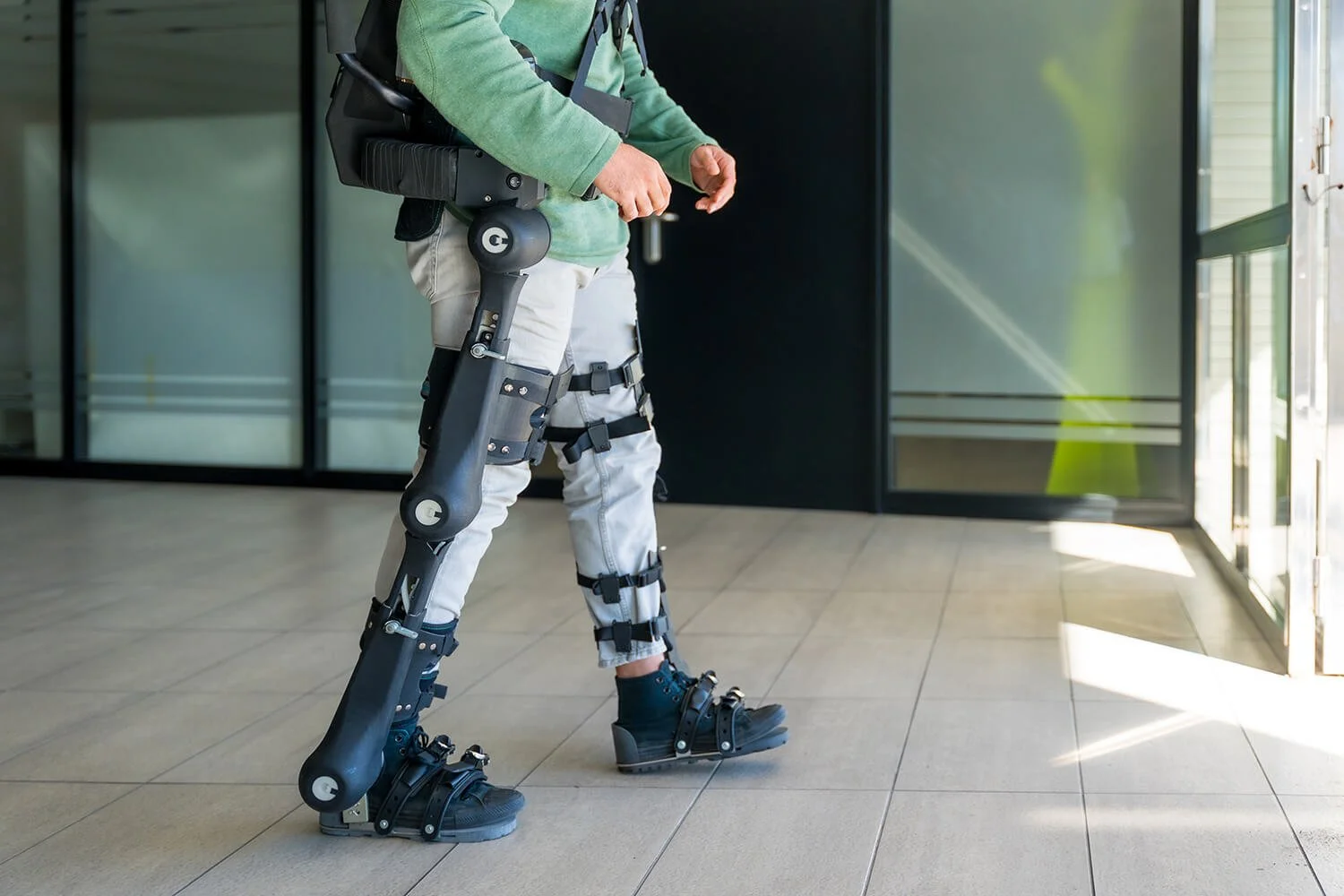
Is robotic rehabilitation right for me?
This is the question most people reading this article are actually here to answer. The honest answer is: it depends on your condition, your goals, and where you are in your recovery. The best way to find out is through a comprehensive clinical assessment.
That said, here is a practical guide to help you think through whether robotic rehabilitation is likely to be relevant to your situation.
✓ You have had a stroke and are working on walking or hand function - Yes. Robotic rehabilitation has the strongest evidence base in post-stroke recovery. R-Gait for walking, R-Touch for hand recovery, and R-Lead for upper limb and neurocognitive training are all highly relevant. The BTL SIS can also support spasticity management, helping to reduce abnormal muscle tone and improve the quality of active movement. The earlier you access this technology after stroke, the greater the potential benefit, though meaningful recovery is possible at later stages too.
✓ You have an incomplete spinal cord injury - Yes. Robotic gait training and upper limb robotic rehabilitation have strong and growing evidence in incomplete SCI. The R-Gait supports high-repetition walking practice, R-Touch targets hand and upper limb recovery for cervical injuries, and the THERA-Trainer Toro is highly effective for cardiovascular rehabilitation and lower extremity stimulation. The BTL SIS can assist with spasticity and neuromuscular re-education. An assessment will clarify which devices are most appropriate for your injury level and current function.
✓ You have Parkinson's disease - Yes. R-Gait for gait retraining and the THERA-Trainer Toro for cardiovascular conditioning and lower extremity function are both relevant for Parkinson's disease. The BTL SIS can assist with muscle rigidity and joint mobilisation. Technology-enhanced rehabilitation is increasingly recognised as an important component of Parkinson's management, supporting both motor function and quality of life.
✓ You have MS, TBI, or another neurological condition - Yes. Multiple sclerosis, traumatic brain injury, and other neurological presentations are all supported by the technology at RehabX. The specific devices most relevant to you depend on your presentation (gait, upper limb function, spasticity, or cardiovascular conditioning) which is why a personalised assessment is the right first step.
~ You are recovering from orthopaedic surgery - Possibly. The BTL SIS is particularly relevant in post-surgical presentations, supporting pain relief, joint mobilisation, and neuromuscular stimulation in the early recovery phase. The THERA-Trainer Toro is useful for cardiovascular reconditioning and lower extremity rehabilitation following surgery. R-Lead may be relevant for upper limb post-surgical presentations. However, technology-enhanced rehabilitation is generally most impactful in neurological presentations, your physiotherapist will advise whether it adds value in your specific case.
✗ You have had a minor injury or acute musculoskeletal problem - Not typically. The BTL SIS aside, which can be effective for acute and chronic musculoskeletal pain, our rehabilitation technology suite is primarily designed for complex neurological and significant rehabilitation needs. If you have a recent soft tissue injury, back pain, or similar presentation without neurological involvement, standard physiotherapy and exercise physiology will most likely be the right approach. Your clinician can advise if the SIS is appropriate for your pain presentation.
What does a robotic rehabilitation session actually look like?
This is one of the most common questions we are asked, and it is a reasonable one. The word 'robotic' can conjure images that are quite different from reality.
Here is what actually happens at RehabX:
Your physiotherapist or OT begins by reviewing your treatment plan and the goals for that session. Technology is always used with purpose. There is always a clinical reason for which device is being used that day and why.
The device is set up and calibrated to your body, with size, positioning, and resistance or assistance levels all personalised.
Your clinician explains what the device will do and what you will feel. The first session with any new device includes time to familiarise yourself with the sensation before beginning the therapeutic program.
During the session, the clinician monitors your response, observing posture, effort level, movement quality, and any pain or discomfort, and adjusts settings in real time.
Many sessions include biofeedback displays or gamified exercises that you interact with, making training engaging and giving you real-time information about how your movements are performing.
Sessions typically run for thirty to sixty minutes, depending on the device, your current capacity, and your overall program structure.
After the session, your clinician records outcomes, notes any changes in your response, and uses this information to plan subsequent sessions.
The experience is not painful. Many patients describe it as surprisingly gentle, particularly in the early phases when devices are providing assistance rather than resistance. The intensity is always calibrated to your current capacity and adjusted as you improve.
Is robotic rehabilitation covered by NDIS or insurance?
The good news is that robotic rehabilitation at RehabX is not billed separately as a technology surcharge. As you are paying for physiotherapy or occupational therapy sessions, the technology is integrated into the clinical service your treating clinician provides.
NDIS: Physiotherapy and occupational therapy sessions, including those that incorporate robotic rehabilitation technology, are fundable under the NDIS 'Improved Daily Living' support category. RehabX can deliver services directly under NDIS plans for plan-managed and self-managed participants. Speak to your support coordinator or contact our team to discuss how your plan can be used.
TAC and WorkCover: Technology-enhanced rehabilitation is fully consistent with the evidence-based rehabilitation standards required by TAC, WorkCover, and other insurance schemes. RehabX works directly with case managers to ensure your program is documented and approved appropriately.
Private health insurance: Sessions with our physiotherapy or OT team, including technology-assisted sessions, may attract rebates under your extras cover, depending on your policy and annual limits. Check with your fund before your first appointment.
Self-funded: Many people choose to invest privately in technology-enhanced rehabilitation, particularly where publicly funded services have wait times or limited access to specialist technology. Our team can discuss cost-effective program structures based on your goals and budget.
The most important step is finding out.
Robotic rehabilitation is not right for everyone. But for the right person, someone recovering from stroke, neurological injury, or a complex condition that requires intensive, targeted practice, it can make a meaningful difference to what is achievable.
The question of whether it is right for you cannot be answered by an article. It can only be answered by a clinician who has assessed your specific presentation, understands your goals, and knows which devices and approaches are most likely to contribute to your recovery.
At RehabX, our clinicians have undertaken specialised training in robotic and technology-assisted rehabilitation. They understand how to select the most appropriate technology, prescribe the right intensity and dosage of therapy, and tailor every session to your individual goals, abilities and stage of recovery.
Our team will talk through your history, examine your current function, and give you an honest picture of what a program at RehabX could look like, including whether and how our technology suite might play a role.
Technology doesn't replace clinical expertise. It enhances it.
Curious about robotic rehabilitation?team
Book an assessment at RehabX. Our clinicians will assess whether technology-enhanced rehabilitation is right for your situation and explain exactly how it could contribute to your recovery.
Contact us today | rehabx.com.au | Book online: rehabx.com.au/booking-form
Or email us: enquiries@rehabx.com.au
About RehabX
RehabX is a specialist advanced rehabilitation centre located in North Lakes, Queensland. We deliver integrated, evidence-based care for people with neurological, musculoskeletal, and complex rehabilitation needs, bringing together a multidisciplinary team and world-class robotic rehabilitation technology under one roof.
Disclaimer: This article is intended for general educational purposes only and does not constitute medical advice. Please consult a qualified healthcare professional regarding your individual circumstances. All clinical claims in this article are based on published evidence available at the time of writing.