
Spinal Cord Injury Rehabilitation
What’s Possible and What to Expect
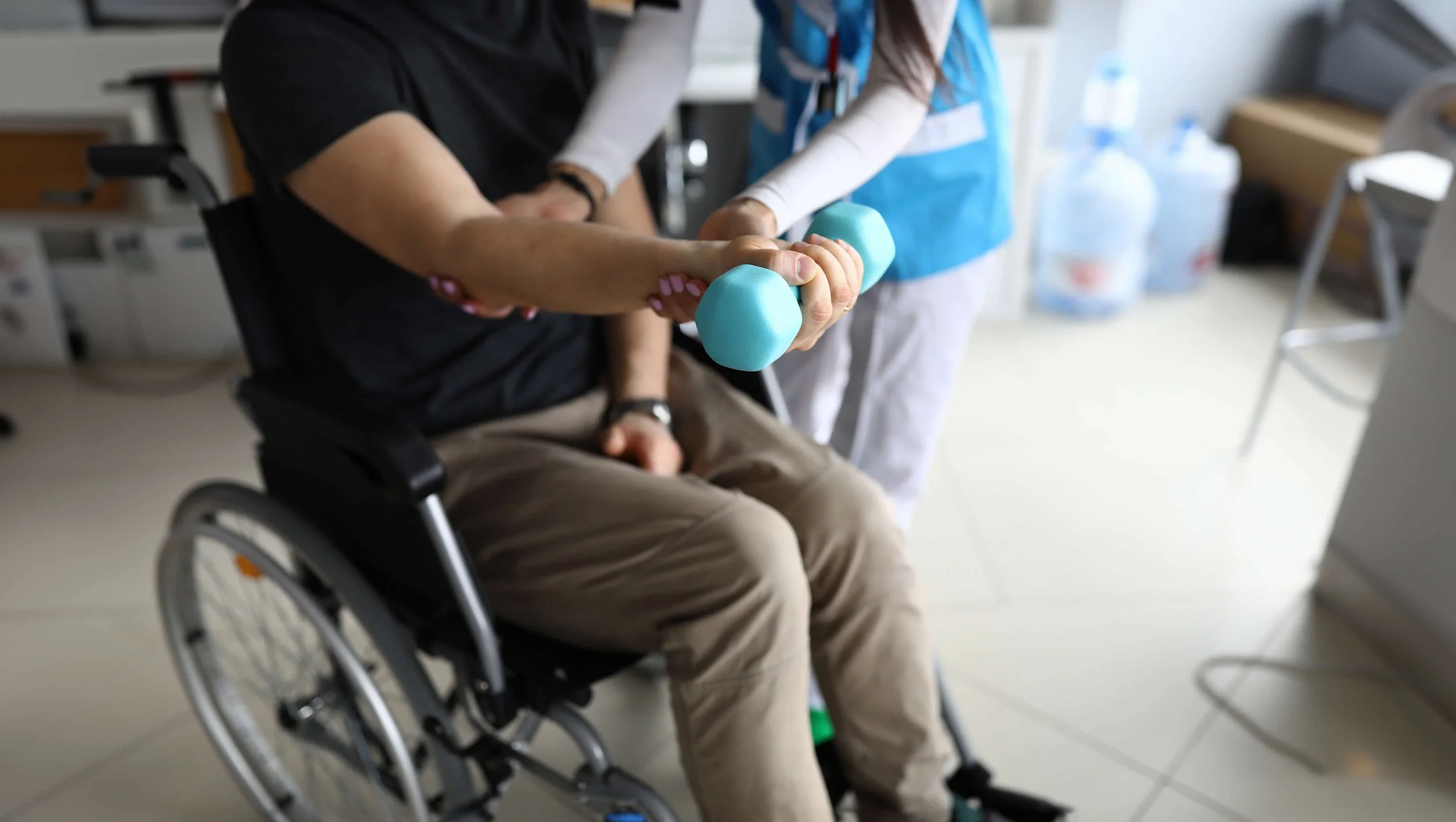
A spinal cord injury is one of the most profound and life-altering events a person can experience. In a moment, the body you have always known becomes a body that feels, moves, and works differently, and the questions that follow are vast. Will I walk again? Will I regain the use of my hands? What does life look like from here?
These are not questions with simple, universal answers. But they are questions that deserve honest, evidence-informed responses, because what is possible in spinal cord injury rehabilitation in 2026 is genuinely different from what was possible ten or twenty years ago.
This article explains what spinal cord injury is, what the current evidence says about recovery and rehabilitation, what a comprehensive program looks like, and how to navigate funding and access in Australia. If you or someone you love has recently experienced an SCI, or if you're looking for specialist outpatient rehabilitation, this guide is for you.
Understanding spinal cord injury
The spinal cord is the main pathway through which the brain communicates with the body. When it is damaged, by trauma such as a fall, motor vehicle accident, or sports injury, or by non-traumatic causes such as tumours, infections, or degenerative conditions, that communication pathway is disrupted. The result is impaired motor function, sensation, and autonomic regulation below the level of the injury.
Spinal cord injuries are classified using the ASIA Impairment Scale (AIS), which describes the severity and extent of the neurological deficit:
AIS A – Complete: No sensory or motor function is preserved below the level of the injury.
AIS B – Sensory incomplete: Sensory function is preserved below the level of the injury, but there is no motor function.
AIS C – Motor incomplete: Some motor function is preserved below the level of the injury, but most muscles have less than antigravity strength.
AIS D – Motor incomplete: Motor function is preserved below the level of the injury, with most key muscles grading 3/5 or better. Functional walking is often possible.
AIS E – Normal: Motor and sensory function are normal, although features of a spinal cord syndrome may still be present.
This classification matters enormously for rehabilitation, because the degree of incompleteness is one of the strongest predictors of functional recovery potential. People with incomplete injuries, AIS B, C, or D, often have significant capacity for neuroplastic recovery with intensive, well-targeted rehabilitation.
20,800+
Australians living with SCI
81%
Under-65 SCIs from traumatic causes
~350
New traumatic SCIs per year in Australia
Sources: AlphaBeta / Spinal Cure Australia, 2020; Spinal Cord Injuries Australia, 2024
What does the evidence say about recovery after SCI?
The most important thing to understand about spinal cord injury rehabilitation is that the nervous system retains a remarkable capacity for reorganisation, even after significant injury. This is neuroplasticity: the brain and spinal cord's ability to form new neural connections, reroute signals, and gradually restore function in response to the right stimulation.
The evidence for neuroplastic recovery after SCI has grown substantially in recent years, and it has fundamentally changed how specialist rehabilitation teams approach these injuries.
Activity-based therapy and task-specific training
One of the most important paradigm shifts in SCI rehabilitation is the move toward activity-based therapies, interventions that stimulate the motor pathways below the injury level through repetitive, task-specific movement, even in people who cannot yet move voluntarily. The evidence shows that this kind of stimulation drives genuine neuroplastic change in the spinal cord and brain, supporting recovery of function that passive approaches cannot achieve.
RESEARCH SPOTLIGHT
A newly published Australian and New Zealand clinical practice guideline for the physiotherapy management of spinal cord injuries found that early, intensive, task-specific physiotherapy is the cornerstone of SCI rehabilitation.
The guideline, developed through systematic review of randomised controlled trials, provides the first comprehensive evidence-based framework for physiotherapy in SCI specifically for Australian and New Zealand clinical settings.
Robotic rehabilitation is changing what's possible
One of the most significant advances in SCI rehabilitation in recent years has been the integration of robotic and technology-assisted therapies, not as alternatives to clinical physiotherapy, but as tools that allow it to be delivered at a level of intensity, precision, and repetition that manual therapy alone cannot match.
RESEARCH SPOTLIGHT
A comprehensive literature review published in 2025 found that robotic rehabilitation systems, including end-effector and exoskeleton types, consistently improve motor outcomes in people with SCI, particularly in the subacute phase. Importantly, exoskeleton-based training was shown to improve walking independence in incomplete SCI patients in a 2023 randomised controlled trial, with walking gains maintained at follow-up.
A hopeful note on what 'complete' really means
It is worth noting that ASIA A classifications, historically considered 'complete' injuries with limited recovery expectations, are not as absolute as once believed. Case studies and emerging clinical evidence continue to document meaningful functional recovery in people with initially complete injuries, particularly with early, intensive rehabilitation and emerging neuromodulation technologies. These findings reinforce the principle that rehabilitation should never be limited by an assumption about what is possible.
What does SCI rehabilitation include?
Comprehensive SCI rehabilitation is not a single therapy. It is a coordinated, multidisciplinary program that addresses every dimension of function, independence, and wellbeing, delivered by a team of specialists working together under one shared treatment plan.
Physiotherapy
Physiotherapy is the foundation of SCI rehabilitation. A physiotherapist specialising in neurological and SCI presentations will focus on maximising motor function, mobility, and independence through evidence-based, task-specific training. This includes:
Gait re-education and walking rehabilitation - For people with incomplete SCI who have some preservation of motor function below the injury level
Upper limb rehabilitation - For cervical injuries, restoring arm and hand function through progressive movement training
Transfer training - Safely moving between wheelchair, bed, chair, car, and other surfaces
Respiratory physiotherapy - Critically important for cervical and thoracic injuries affecting breathing muscles
Spasticity management - Addressing abnormal muscle tone that can impair function and comfort
Cardiovascular reconditioning - Rebuilding aerobic capacity following the deconditioning that typically accompanies SCI
Occupational therapy
For people with SCI, particularly cervical injuries, occupational therapy is often just as critical as physiotherapy. OT focuses on restoring independence in daily activities: dressing, grooming, meal preparation, driving, work, and recreation. This includes upper limb functional retraining, assistive technology assessment and prescription, home modification recommendations, and vocational rehabilitation where relevant.
Exercise physiology
An accredited exercise physiologist designs and supervises the structured exercise program that supports long-term health, physical function, and quality of life after SCI. This includes strength training, cardiovascular programs, and condition-specific exercise for the prevention of secondary complications, including cardiovascular disease, obesity, and musculoskeletal injury, which are significantly elevated in people living with SCI.
Technology-enhanced rehabilitation at RehabX
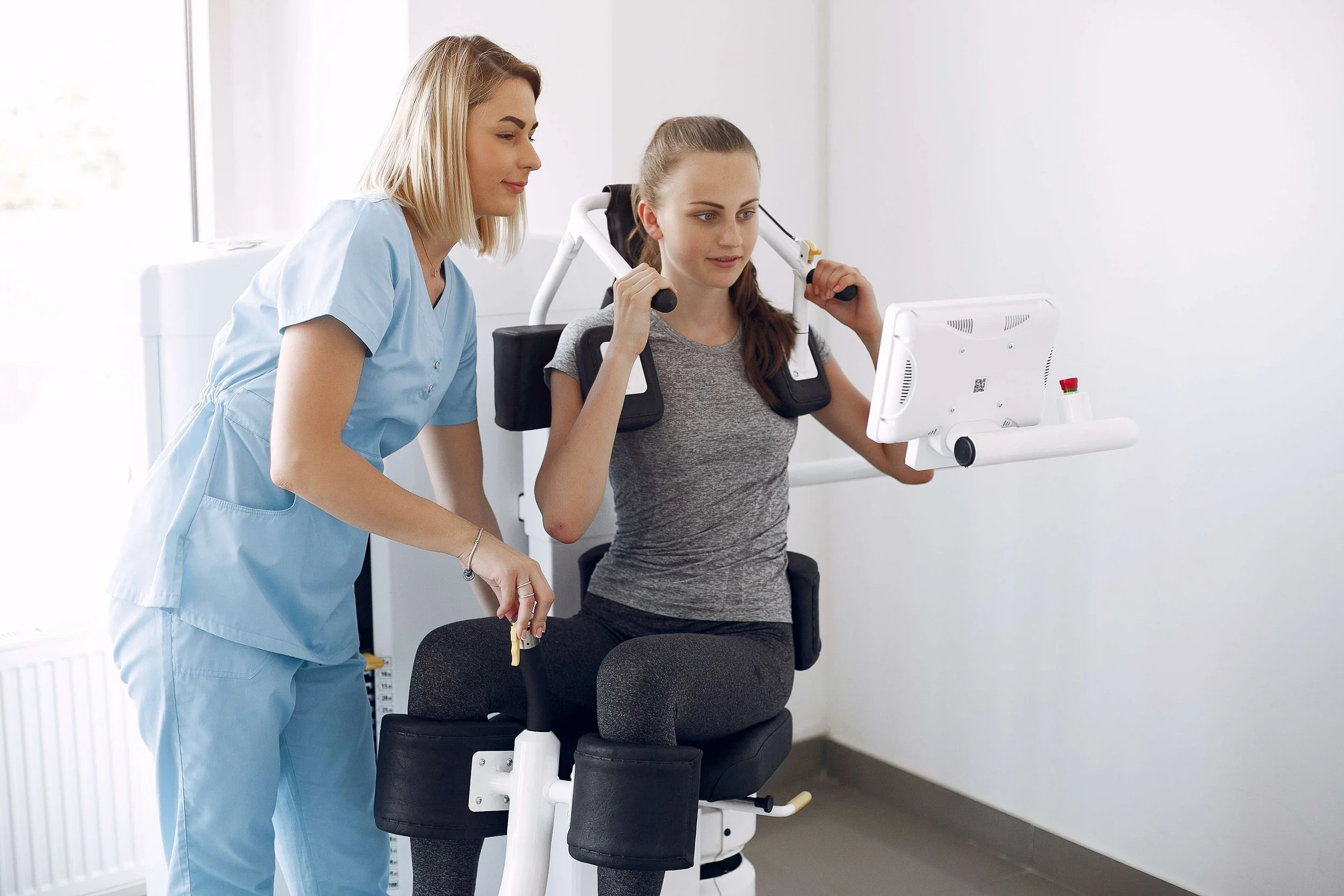
At RehabX, our physiotherapy and OT programs are supported by a suite of advanced rehabilitation technology specifically suited to SCI rehabilitation:
Technology available for SCI rehabilitation at RehabX
BTL R-Gait - Robotic end-effector gait trainer that guides the feet through a natural walking pattern, enabling high-repetition gait practice for people who cannot yet walk independently. Particularly effective for incomplete SCI patients working toward walking recovery.
BTL R-Touch - Soft robotic glove delivering passive, precise finger movements to drive neuroplastic recovery in the hand and upper limb. A critical tool for cervical SCI patients prioritising hand function restoration.
BTL R-Lead - Sensor-based upper limb and neurocognitive rehabilitation for people in the advanced recovery phase, targeting task-specific functional training.
THERA-Trainer Toro - Motor-assisted cycling for cardiovascular rehabilitation, lower extremity stimulation, and spasticity management. Effective even in people with minimal active movement, motor assistance does the work until the patient can contribute actively.
Psychology and psychosocial support
The psychological impact of SCI is profound and well-documented. Depression, anxiety, grief, and adjustment difficulties are common, and they directly affect rehabilitation outcomes when left unaddressed. Psychosocial support, including access to psychology and peer support programmes, is an essential component of comprehensive SCI care. A 2025 study in Frontiers in Rehabilitation Sciences noted that embedding psychosocial care guidelines into specialist SCI rehabilitation services is critical for person-centred outcomes. Source
What to expect: A realistic and honest guide
No rehabilitation team can promise specific outcomes after SCI, and you should be wary of any that do. What we can say, with genuine confidence, is that intensive, evidence-based, multidisciplinary rehabilitation consistently produces better outcomes than lower-intensity or fragmented approaches, and that the goals you set, and how early and consistently you pursue them, matter enormously.
In the early phase: The hospital and inpatient rehabilitation
Following acute medical stabilisation, most people with SCI are transferred to an inpatient rehabilitation unit. This phase focuses on medical stabilisation, early mobilisation, prevention of complications (pressure injuries, respiratory infections, deep vein thrombosis), basic transfer and mobility training, and psychological adjustment and family education. Inpatient rehabilitation length varies significantly depending on the severity and level of injury.
In the outpatient and community phase: Where RehabX comes in
After discharge from inpatient rehabilitation, ongoing outpatient rehabilitation is critical, and this is often where the most meaningful functional gains are made. The nervous system continues to respond to intensive, targeted training for months and years after injury, and the gains achievable in the outpatient phase can be substantial.
At RehabX, our outpatient SCI programs are individually designed based on a comprehensive assessment of injury level and completeness, current functional capacity, your own priorities and goals, funding type and plan, and living environment and daily life demands.
Realistic expectations: what drives better outcomes in SCI rehabilitation
Injury incompleteness - People with AIS B, C, or D injuries have greater neuroplastic recovery potential; intensive rehabilitation can significantly extend this
Time since injury - Recovery potential is highest in the first year, but neuroplastic change continues to occur with the right stimulus well beyond this
Intensity of rehabilitation - Higher volumes of repetitive, task-specific practice consistently produce better functional outcomes
Early access to specialist outpatient rehabilitation - Gaps in care between inpatient discharge and outpatient commencement can lead to preventable decline
Motivation and goal alignment - Rehabilitation works best when the goals are yours and the team around you genuinely understands what matters most to you
Funding SCI rehabilitation in Australia
Navigating funding after SCI can feel overwhelming, but there are several pathways available to Australians, and understanding your options is an important first step.
NDIS - The National Disability Insurance Scheme is the primary long-term funding pathway for most Australians with SCI under 65. As of March 2025, there were thousands of registered NDIS participants with spinal cord injury as their primary condition. Rehabilitation, including physiotherapy, OT, and exercise physiology, is funded under the 'Improved Daily Living' support category. RehabX is a registered NDIS provider and can help you understand how to use your plan to access our programs.
TAC and WorkCover: If your SCI resulted from a motor vehicle accident (TAC in Victoria, CTP schemes in other states) or a workplace injury (WorkCover), your rehabilitation is likely funded through the relevant scheme. These schemes typically fund comprehensive rehabilitation, including specialist outpatient services. RehabX works with case managers from TAC, WorkCover, and other insurers.
Private health insurance: Extras cover can provide rebates for physiotherapy, OT, and exercise physiology sessions. The amount covered depends on your policy and annual limits. Check with your fund before beginning a program.
Self-funded: Some people choose to fund rehabilitation privately, particularly where they want to supplement funded services or access technology-enhanced programs not available elsewhere. Our team can discuss cost-effective program options based on your budget and goals.
Choosing the right rehabilitation provider
Not all outpatient rehabilitation providers are equipped to deliver comprehensive, technology-enhanced SCI rehabilitation. When choosing a provider, there are specific questions worth asking:
Do they have clinicians with specialist neurological and SCI rehabilitation experience, not just general physiotherapy?
Do they offer a genuine multidisciplinary team (physiotherapy, OT, exercise physiology, and access to psychology) under one roof and working together?
Do they have access to technology that enables high-repetition, task-specific rehabilitation for gait, upper limb, and cardiovascular function?
Do they measure your outcomes using validated tools, and can they show you your progress over time?
Do they communicate with your inpatient team, GP, and insurer, and do they do so consistently, not just when asked?
The answers to these questions will tell you a great deal about whether a provider is likely to give you the best possible chance at the recovery you are working toward.
What's possible is more than you might think
Spinal cord injury rehabilitation has changed profoundly in the past decade. The combination of a deeper understanding of neuroplasticity, the growing evidence base for intensive task-specific training, and the emergence of robotic and technology-assisted rehabilitation has expanded what is achievable for people with SCI in ways that were not previously possible.
None of this means that recovery is easy, guaranteed, or the same for everyone. What it does mean is that the effort you put into rehabilitation, particularly when supported by an experienced, well-equipped team, is more likely to produce meaningful results than ever before.
At RehabX, our team understands the complexity of spinal cord injury and the courage it takes to pursue rehabilitation with dedication every single day. We are here to work alongside you, with the expertise, technology, and commitment to help you achieve what matters most.
Talk to our SCI rehabilitation specialists
We work with NDIS participants, TAC and WorkCover clients, and self-funded patients. Book a comprehensive assessment and let's talk about what a program could look like for your specific situation.
Contact us today | rehabx.com.au | Book online: rehabx.com.au/booking-form
Or email us: enquiries@rehabx.com.au
About RehabX
RehabX is a specialist advanced rehabilitation centre located in North Lakes, Queensland. We deliver integrated, evidence-based care for people with neurological, musculoskeletal, and complex rehabilitation needs, bringing together a multidisciplinary team and world-class robotic rehabilitation technology under one roof.
Disclaimer: This article is intended for general educational purposes only and does not constitute medical advice. Please consult a qualified healthcare professional regarding your individual circumstances. All clinical claims in this article are based on published evidence available at the time of writing.