


Our Technology
Technology-enhanced rehabilitation
Our technology-assisted rehabilitation may support:
Walking and mobility
Hand and arm function
Balance and falls prevention
Stiffness and movement control
Pain and posture
Strength, endurance and conditioning
Functional movement practice
Cognitive and task-based rehabilitation
Motivation, feedback and measurable progress
RehabX is home to one of the most advanced collections of rehabilitation technology in Australia.
Every device in our facility has been selected based on clinical evidence, peer-reviewed research, and the specific needs of our patient population.
We use carefully selected rehabilitation technologies to support walking, arm and hand function, movement control, pain management, muscle activation, balance, endurance and therapy engagement. Every technology is integrated into a broader rehabilitation program and guided by experienced clinicians who determine when, how and why it should be used.
Our technology
-
Robotic gait training for walking rehabilitation
BTL R-Gait supports structured walking practice by helping clients complete repeated stepping and gait training in a controlled therapy environment.
Our clinicians may use R-Gait as part of a personalised rehabilitation program to support walking pattern, mobility, endurance, confidence and functional independence. This technology may be suitable for clients recovering from neurological injury, spinal cord injury, stroke, traumatic brain injury or other conditions affecting walking and lower limb control.
BTL R-Gait may support:
Walking and mobility
Balance and falls prevention
Endurance and activity tolerance
Daily living and independence
-
Interactive rehabilitation for movement and function
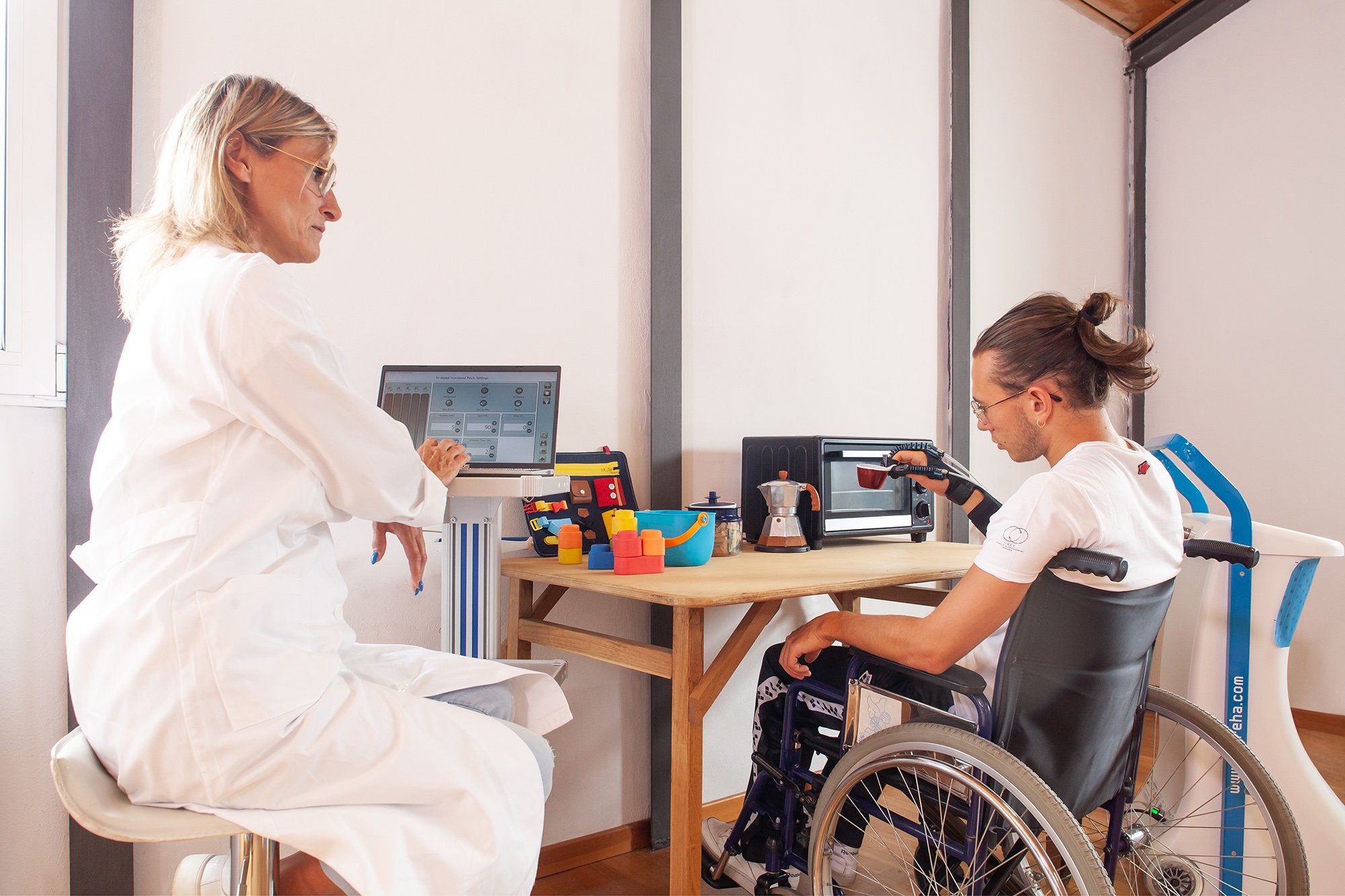
BTL R-Touch supports functional hand and upper limb rehabilitation. It is designed to assist people working on hand opening, grasping, fine motor control, upper limb coordination and functional movement after neurological injury or other conditions affecting hand use.
This technology can help make therapy more engaging, repetitive and targeted, supporting progress in tasks that matter in everyday life. It may be used to support upper limb movement, coordination, reaction time, visual-motor control, attention and task-based rehabilitation activities.
BTL R-Touch may support:
Hand and arm function
Coordination and movement control
Daily living and independence
Task-based rehabilitation
-
Advanced upper limb rehabilitation
BTL R-Lead supports arm movement, reaching, shoulder control, coordination and task-specific upper limb rehabilitation.
Our clinicians may incorporate R-Lead into rehabilitation programs to help people practise meaningful arm and hand activities in a structured environment that supports repetition, engagement and progress.
BTL R-Lead may support:
Hand and arm function
Coordination and movement control
Daily living and independence
Pain and posture management
-
BTL SIS is a non-invasive therapy technology that may be used to support pain management, muscle activation and preparation for movement where clinically appropriate.
At RehabX, BTL SIS is only used following appropriate clinical assessment and as part of a broader rehabilitation plan.
BTL SIS may support:
Pain and posture
Stiffness and spasticity
Walking and mobility
Hand and arm function
Movement preparation
-
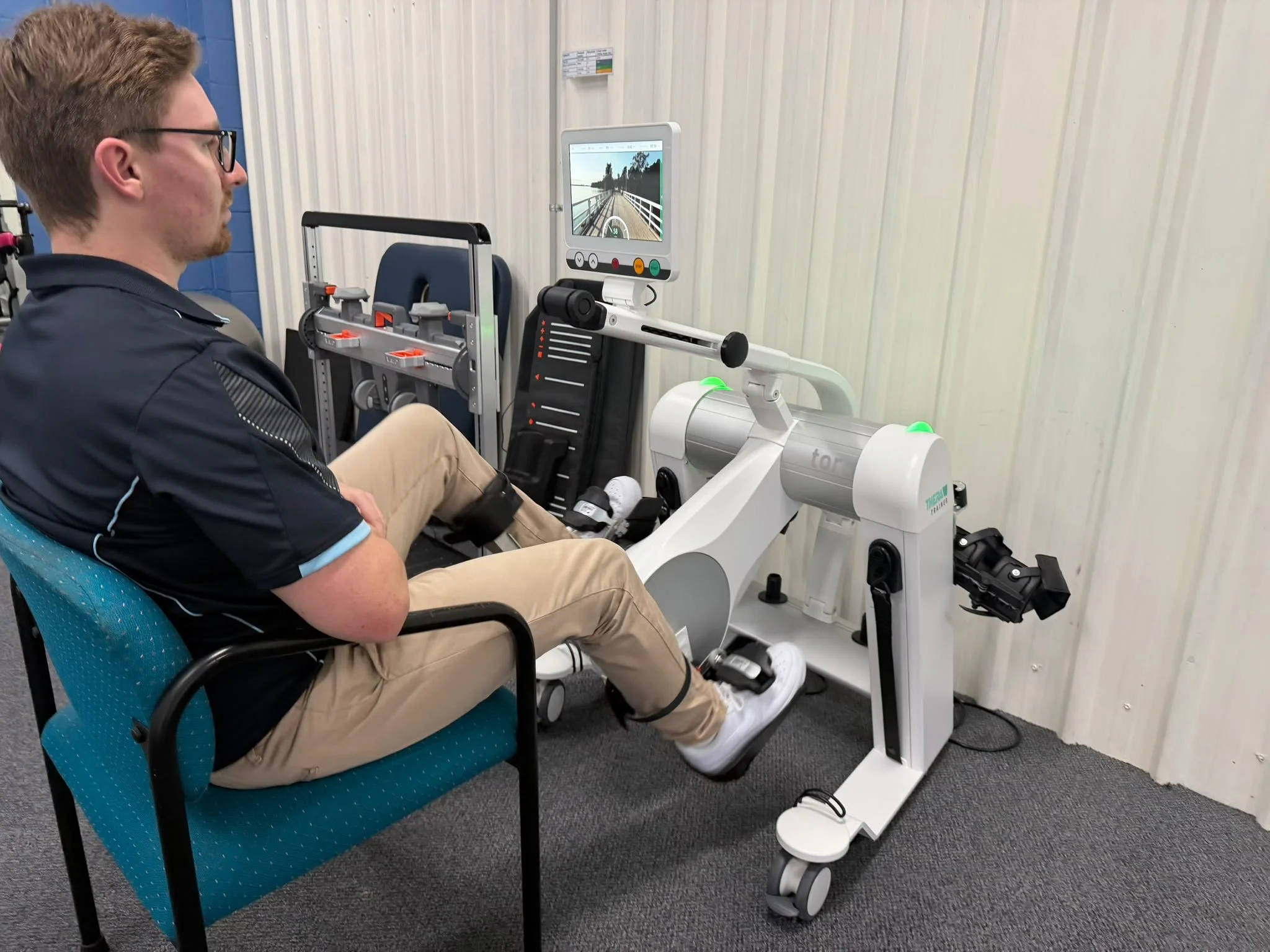
THERA-Trainer Toro supports structured cycling-based movement training for the arms, legs, or both.
Depending on a person's ability and goals, it may be used for active, assisted or passive exercise. Our clinicians may use Toro to support endurance, strength, mobility, activity tolerance, conditioning and therapy engagement.
It can be particularly valuable for people who fatigue quickly, have reduced movement capacity, require supported exercise, or are rebuilding physical capacity following illness, injury or neurological conditions.
THERA-Trainer Toro may support:
Strength and conditioning
Endurance and stamina
Mobility and movement practice
Activity tolerance
Daily living and independence
-
Advanced balance, strength and movement assessment
VALD ForceDecks use precision force plates to measure how the body produces and distributes force during movement. This technology provides objective information about balance, lower limb strength, movement control and differences between the left and right sides of the body.
At RehabX, our clinicians can use ForceDecks to identify areas of weakness, assess functional movements such as standing up from a chair, and monitor changes throughout rehabilitation. These insights help guide personalised treatment programs, track progress and support informed clinical decisions.
VALD ForceDecks may support:
Balance and falls risk assessment
Lower limb strength and stability
Functional movement assessment
Identification of strength and movement asymmetries
Objective measurement of rehabilitation progress
-
Precision strength and movement measurement
VALD DynaMo is a handheld assessment device that measures muscle strength and joint range of motion, providing accurate, objective information about physical capability.
At RehabX, DynaMo allows our clinicians to assess specific muscle groups, identify strength limitations and measure changes over time. This information helps inform individualised rehabilitation programs and supports decisions about exercise progression, movement recovery and functional goals.
VALD DynaMo may support:
Muscle strength assessment
Joint mobility and range of motion
Identification of muscle weakness and imbalances
Rehabilitation planning and exercise progression
Objective tracking of strength and movement
-
Targeted strength testing and rehabilitation
VALD ForceFrame is an advanced strength assessment and training system that measures the force produced by specific muscle groups during controlled exercises.
At RehabX, ForceFrame enables our clinicians to assess strength across major joints, identify differences between muscle groups and deliver targeted exercises with real-time feedback. This allows rehabilitation programs to be tailored to each person's capabilities, with measurable information to guide progression over time.
VALD ForceFrame may support:
Targeted muscle strength assessment
Identification of strength differences and imbalances
Upper and lower limb rehabilitation
Controlled, progressive strengthening
Objective measurement of rehabilitation progress
-
Targeted treatment for persistent musculoskeletal pain
BTL Focused Shockwave Therapy is a non-invasive treatment that uses focused acoustic waves to stimulate a biological response in targeted tissues. It may be used to help manage certain persistent musculoskeletal conditions, particularly those affecting tendons, muscles and surrounding soft tissues.
At RehabX, our clinicians may incorporate focused shockwave therapy into an individualised treatment program following a comprehensive assessment. Depending on the condition, treatment may help reduce pain and support rehabilitation alongside targeted exercise, strengthening and movement-based therapy.
BTL Focused Shockwave Therapy may support:
Persistent tendon pain and tendinopathies
Plantar fasciitis and heel pain
Tennis elbow and other overuse conditions
Selected shoulder conditions, including calcific tendinopathy
Musculoskeletal pain management
Participation in exercise and rehabilitation

Technology Supporting Real-Life Goals
Your diagnosis may explain what's happening. Your goals determine where we focus.
That's why our technology-assisted rehabilitation programs are designed around the challenges people face in everyday life, helping improve mobility, strength, balance, coordination, endurance, independence and confidence through meaningful, goal-directed therapy.
Discover how advanced robotics, evidence-based technology and expert clinical care can help unlock new possibilities.